The joint venture company completed its business registration today, obtaining a business license issued by the Market Supervision Administration of the Eighth Division of the Xinjiang Production and Construction Corps, marking the official establishment of the project company. According to the plan, the company will advance the preliminary work of the project in stages, with an initial investment of 5 million yuan, followed by phased capital injections and increases according to the project's progress. Xinjiang Tianye will fully leverage its chemical management experience, while Tianchi Energy will prioritize coal resource supply; both parties will collaborate to ensure the efficient implementation of the project. Controllable Risks, Prospects for High-Quality Development In response to potential risks such as approvals and market fluctuations, Xinjiang Tianye has established a special response mechanism. It will strengthen capital management through phased capital injections, increases, and dynamic adjustments, strive for policy support, and optimize resource allocation through market-based means. The company stated that it will strictly fulfill its information disclosure obligations to ensure investors are promptly informed of the project's progress. The establishment of this joint venture company is not only a key action for Xinjiang Tianye to implement its "dual-carbon" strategy and promote high-quality development, but also a vivid practice of deepening the integration of the Corps and local communities. In the future, both parties will work together to create a benchmark project in the coal chemical industry, contributing the strength of state-owned enterprises to Xinjiang's construction of a national strategic energy resource security base and the promotion of high-quality regional economic development.
On December 31, Tianye Group held its 2025 Summary and Commendation Conference and "15th Five-Year Plan" and 2026 Work Deployment Conference. Zhou Jun, Secretary of the Party Committee and Chairman of Tianye Group, attended the meeting and delivered a report entitled "Unifying Thinking, Anchoring Goals, Seeking Progress While Maintaining Stability, Improving Quality and Efficiency, and Writing a New Chapter of High-Quality Development for Tianye Group with Stronger Determination, More Practical Measures, and Greater Efforts."The meeting adhered to the guidance of Xi Jinping Thought on Socialism with Chinese Characteristics for a New Era, thoroughly studied and implemented the spirit of the 20th National Congress of the Communist Party of China and the Second, Third, and Fourth Plenary Sessions of the 20th CPC Central Committee, implemented the spirit of the Central Economic Work Conference, implemented the spirit of General Secretary Xi Jinping's important speeches, instructions, and directives on Xinjiang and the Xinjiang Production and Construction Corps, implemented the spirit of the Tenth Plenary Session of the Eighth CPC Xinjiang Production and Construction Corps Party Committee and the various work arrangements of the division and city party committees, closely combined with the actual development of Tianye Group, summarized and reviewed the main work of the "14th Five-Year Plan" and 2025, clarified the overall development goals of the "15th Five-Year Plan," and arranged and deployed the company's various tasks in 2026 from nine aspects. It mobilized and encouraged the vast number of cadres and employees to take promoting high-quality development as the core, reform and innovation as the driving force, adhere to the development direction of intelligence, greening, integration, and high-end, unite as one, overcome difficulties, and strive to promote the high-quality development of Tianye Group to achieve a new leap forward. The meeting pointed out that in 2025, under the strong leadership of the higher-level party committee, Tianye Group forged ahead under pressure and overcame difficulties, striving to cope with the uncertainty of the situation with the certainty of its own work. The resilience of the industrial chain and the ability to resist risks withstood the test of the market, and the company's reform and development achieved new breakthroughs. The meeting emphasized the need to develop new productive forces in accordance with local conditions, achieve steady improvement in production quality and efficiency, accelerate the drawing of a new industrial blueprint, continuously enhance development potential, continuously improve internal management efficiency, strengthen cohesion, and ensure solid and effective progress in all aspects of work.The meeting stressed that 2026 is the opening year of the 15th Five-Year Plan, a new journey, and the 30th anniversary of the founding of Tianye Group. The entire group must closely follow the decisions and deployments of the higher-level Party committee and the company's development strategy, implement the rectification work of the Xinjiang Production and Construction Corps Party Committee's inspection, focus on safeguarding the bottom line, ensuring operation, promoting innovation, strengthening the foundation, and promoting development, and fully promote quality transformation, efficiency transformation, and power transformation to ensure a steady and sustainable start to the 15th Five-Year Plan.The meeting focused on nine key areas of work related to the new goals and tasks for 2026: focusing on stabilizing growth and improving efficiency, consolidating and expanding the foundation for high-quality development. It anchored the "one profit and five rates" basic indicators, decomposed target tasks, refined work measures, and reflected operating results in specific financial data. We will improve our quality management system, benchmark against top domestic enterprises, strengthen full-process quality control and lean management of all elements, firmly establish the mindset of "living frugally" and the awareness of "starting with myself to reduce costs and increase efficiency," and continuously improve the quality of our products and services. We will focus on project construction to build momentum and accelerate the construction of a modern industrial system. We will closely monitor key construction projects, reverse-schedule the work, use visual aids for planning and execution, race against time, and vigorously promote the projects to accelerate their construction. We will focus on attracting investment and talent, prioritizing projects that extend, supplement, and strengthen the industrial chain, introducing a number of high-quality projects with large investment scale, high technological content, and good development prospects to form a more competitive industrial ecosystem. We will accelerate the demonstration and promotion of new technologies and intensify our efforts to continue seeking industrial cooperation projects in southern Xinjiang. We will focus on revitalizing state-owned enterprise reform to create a new era of modern state-owned enterprises. We will improve the modern enterprise system, continuously optimize the corporate governance mechanism, and strengthen internal audit supervision. We will deepen the reform of the "three systems," strengthen the tenure system and contractual management of the management team, strengthen the scientific setting and precise assessment of performance indicators, and promote the normalization and institutionalization of competitive recruitment for management personnel. Deepen income distribution reform, comprehensively build an incentive-based assessment system that closely links innovation, development, safety, environmental protection, quality, and efficiency, and firmly establish and strengthen the development philosophy of "putting strivers first." Steadily advance mixed ownership reform, improve corporate governance, transform operating mechanisms, and enhance operational efficiency. Focus on innovation-driven development and talent leadership to cultivate and develop new types of productive forces. Continuously strengthen research on key core technologies, focusing on the diversified, green, and high-end development of the coal chemical industry chain, providing technological support for extending, supplementing, and strengthening the chain. Strengthen the transformation of scientific and technological achievements, vigorously promote the industrialization of high-efficiency water-saving technologies and the integrated application demonstration of smart agriculture projects. Increase investment in the construction of innovation systems and platforms, forming a sustainable virtuous cycle of innovation where first-class platforms attract first-class talent, and first-class talent achieves first-class results. Increase innovation incentives, improve the incentive mechanism oriented towards value creation, and create a strong atmosphere of respecting science, knowledge, and talent. Focus on inherent safety and green environmental protection to solidify the foundation for high-quality enterprise development. Upholding the fundamental safety line, we will implement a "red and green light" early warning mechanism for safety risks, accelerate the full coverage of the "Industrial Internet + Safe Production" system and the deep application of AI technology, and comprehensively improve the risk identification, emergency response, and self-rescue and mutual rescue capabilities of all employees. We will deepen the green transformation campaign, adhere to source prevention and proactive investment, and promote source reduction, process control, and end-of-pipe treatment in a coordinated manner with requirements exceeding industry standards. We will continue to fight the battle against pollution and strive to be a leader in green development. Focusing on industrial control and digital empowerment, we will accelerate the construction of smart factories. We will solidify the basic support system, promote the construction of data governance and information standardization systems, improve information and digital management systems, implement special information technology upgrades, and enhance the safety protection capabilities of key areas. We will improve the level of intelligent operation, build predictive maintenance models for equipment, realize the transformation and implementation from "post-event maintenance" to "pre-event maintenance," improve work efficiency, and cultivate new development momentum. Focusing on the informatization and intelligent construction of new projects, we will plan and design with a high starting point, and build the first phase of the intelligent ecological photovoltaic coupled green resin project into a leading digital and intelligent factory in China. Focusing on refined quality improvement and efficiency enhancement, we will comprehensively build a "large-scale quality" management system. Adhering to a market- and customer-oriented approach, we implement tiered customer management and precise follow-up visits, establishing and operating a 24/7 rapid response mechanism, and treating customer feedback as the primary signal for product improvement and service optimization. We strengthen innovation and R&D quality, fully leveraging the leading role of model workers and craftsmen in technological innovation, problem-solving, and collaboration. We utilize grassroots innovation platforms such as "Five Small Employees" and "Innovation Studios" to transform the wisdom of every employee into tangible results that improve quality, reduce costs, and create value. We optimize management efficiency and collaborative quality, streamline decision-making processes, enhance problem-solving capabilities, strengthen external communication and image building, and foster a highly efficient, collaborative, and responsive internal environment. Focusing on ideology to cultivate positive energy, we solidify the main position of propaganda and thought. Adhering to the principle of strengthening the sense of community of the Chinese nation as the main line, we firmly grasp the leadership of ideological work and resolutely implement the responsibility system for ideological work. We comprehensively enhance the company's publicity, culture, and brand image, focusing on core tasks, practicing a culture of "execution," promoting deep media integration, and telling the story of Tianye's high-quality development. We will wholeheartedly serve the people, fully utilize the functions of the employee service center and the "trade union station," focus on resolving the urgent needs and concerns of employees, continuously improve their quality of life and sense of gain, happiness, and security, and build a powerful force to drive enterprise development. We will focus on Party building to guide the direction and gather new forces for enterprise development. We will strengthen political construction, firmly grasp the direction of reform and development, and make studying and implementing the Party's innovative theories a compulsory and regular course to ensure that the decisions and deployments of the higher-level Party committee are fully implemented. We will consolidate the organizational foundation, activate grassroots fighting fortresses, comprehensively promote the "Party building+" model, and encourage Party members to take the lead and assume responsibility in urgent, difficult, and dangerous tasks. We will deepen the building of Party conduct and integrity, build a strong bulwark of discipline and work style, continuously consolidate the achievements of the study and education of the spirit of the Central Committee's Eight-Point Regulation, deepen the rectification of unhealthy practices and corruption problems around employees, and continuously create a clean and upright political environment conducive to entrepreneurship. The meeting emphasized that all levels of management personnel within the group must fully implement the twenty-character requirement of "loyalty to the Party, courage to innovate, effective management, contribution to the company's development, and integrity," becoming politically astute individuals, pioneers in reform, experts in scientific management, leaders in practical action, and upright individuals who abide by rules and regulations, transforming their responsibilities into tangible results in promoting the group's high-quality development. Zhou Bin, member of the Party Committee and Deputy General Manager of Tianye Group, presided over the meeting. Wang Wei, member of the Party Committee and Secretary of the Discipline Inspection Commission, read out the "Decision of the Party Committee of Tianye Group on Commending Advanced Units, Collectives, and Individuals in 2025." The meeting commended advanced units, advanced collectives, various model workers and individuals, and representatives of "Five-Good Families."
Xinjiang Tianye Chemical Co., Ltd. is a major chemical enterprise in Xinjiang, China, and a subsidiary of Xinjiang Tianye Group. It primarily engages in the production and R&D of chlor-alkali chemicals and coal chemicals. The company actively responds to the national Western Development Strategy, adheres to technological innovation and green development, and has made positive contributions to Xinjiang's economic and social development and ethnic unity. Under the leadership of the Communist Party of China, Xinjiang Tianye Chemical Co., Ltd. will continue to uphold the concept of high-quality development and make greater contributions to promoting Xinjiang's prosperity and stability and the nation's energy and chemical industry.
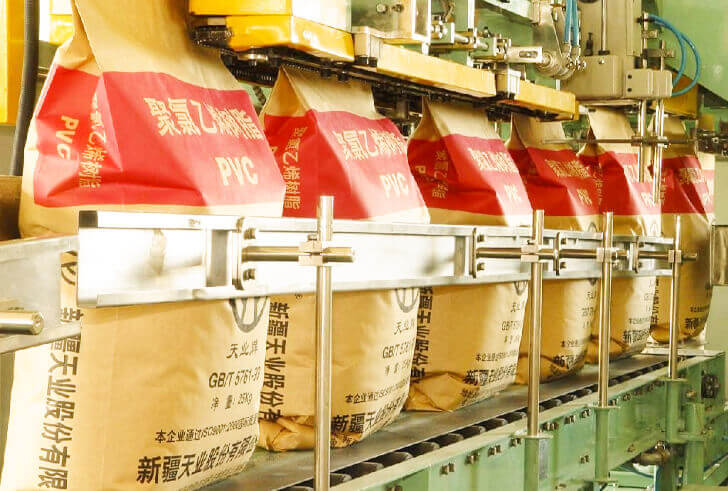
People living around Shihezi, Xinjiang notice the influence of Tianye Chemical well beyond the gates of its manufacturing plants. Trains loaded with polyvinyl chloride (PVC) snake out of the city, and truck drivers haul fertilizer for days across dusty roads. As China looks for ways to balance industrial growth and environmental commitments, the story behind a company like Tianye becomes a window into both the promise and peril tied to chemical manufacturing. Since the 1990s, Tianye has turned raw salt and coal into PVC, caustic soda, fertilizers, and more. The scale catches your eye: annual PVC capacity lands among the top producers nationwide. Hundreds earn their wages shaping powder, pipes, and pellets, then sending them out to support cities thousands of kilometers away. Growing up in a region where agriculture rubs shoulders with heavy industry, it is easy to see how jobs from Tianye put food on local tables and help families send children to college. Local leadership touts this success, arguing that homegrown businesses like Tianye form the backbone of regional development and modernization.Inside these victories, problems often hide in plain sight. Pollution stands out as a tough reality. The production of PVC and other chlorinated chemicals requires heavy use of coal and salt, spitting out mercury, dioxins, and chloride waste streams that risk ending up in waterways. Residents sometimes talk about foul air after rain, or worry about the taste of well water in dry years. Official statements promote green upgrades and stricter effluent treatment, but trust frays if transparency does not match promises. The story of pollution is not only a global concern repeated by outsiders; it is a daily conversation for communities living nearby.Regulators in China have started to look closer at companies like Tianye. The Ministry of Ecology and Environment lists tougher emission standards each year. Public access to environmental monitoring has expanded—local residents view real-time smog figures on government websites. Still, loopholes in reporting and patchy application of new rules mean lapses continue. Many workers see these efforts up close and ask for stronger training and safety standards as chemical handling remains risky. It strikes me as clear that policies look effective only when the people walking those factory floors know their own safety is a true priority, not just a slogan.Tianye does not operate alone in China’s industrial boom. Companies share knowledge and compete fiercely, especially as new technology and stricter safety requirements drive costs higher. The pressure to modernize and automate never seems to let up. For Tianye, shifting toward more energy-efficient equipment, investing in carbon recycling, or developing less toxic catalysts could slowly restore public confidence. I’ve seen first-hand how partnerships with universities and technical schools can fuel innovation—turning environmental upgrades from empty talk into factory routines. Some pilot projects already recover salt or reduce toxic air by-products, but scaling these to match growing output remains a stubborn challenge.On the consumer side, the materials that Tianye provides keep construction, agriculture, and infrastructure ticking. In Xinjiang’s cold winters, insulation pipe sourced from these factories helps keep new apartments warm. Rural families rely on fertilizers to raise cotton yields, hoping for better prices each harvest. Yet the volatility of chemical prices and international restrictions on some Chinese goods inject plenty of risk. Factories need predictability as much as government and consumers do. Global trade environments now change overnight, and I have listened to business owners voice frustration as tariffs, logistics, or global crises seem to wipe out months of careful planning.Turning a chemical giant like Tianye toward a more sustainable, community-minded path calls for practical steps. Government can step in with targeted subsidies so companies like Tianye retrofit equipment or trial cleaner production lines. Transparent reporting of environmental data builds trust—especially if everyday people see it and local governments welcome feedback. Tech upgrades in waste treatment and air scrubbing pay off, not just in compliance, but in showing the next generation that heavy industry can carry its own weight. Workers who demand rigorous training and protections push companies forward in practice, while nearby schools and medical clinics funded by corporate taxes give a direct return to those living alongside these plants.Scaling up solutions takes more than one party. Tianye’s story overlaps with the work of suppliers, regulators, and families alike. The slow grind of policy change and plant modernization can frustrate anyone watching from the outside, but on the ground, the combination of small wins and public scrutiny looks like the surest path. Chemical production stays complex, yet new routines—a tightened safety check, an investment in water recycling, an open meeting with neighbors—build a culture where both profit and healthy living sit within reach. From the perspective of someone familiar with the push and pull of industrial towns, every responsible step counts, and the real impact shows not just in quarterly earnings but in the neighborhood air, waterways, and stories told at dinner tables every night.
Spotlights follow companies with roots in Xinjiang these days, especially those with international connections. Xinjiang Tianye Foreign Trade Co Ltd has made its name in global commerce, working with a mix of plastic goods, chemicals, and building materials. There’s nothing unusual about a company responding to market demand across the world. Everything changes once serious questions start tracing back through the supply chain. Business doesn’t happen in a vacuum. Every container shipped and document signed has a backstory that ties workers, managers, resources, and communities. When folks talk about Xinjiang, the conversation often turns to wider issues—human rights, transparency, and fair trade. Reports from different corners raise red flags about forced labor and restricted freedoms across the region. These stories matter because trade partners in North America, Europe, and beyond look at them before signing any contracts. Fair sourcing shouldn’t be optional. Any company building its fortune on the back of hidden suffering risks more than fines or PR storms; long-term trust hangs in the balance. Consumers around the world have started to care about where their goods come from. They want honesty, not just glossy packaging and low prices. It’s not about moral grandstanding. A pounding headache starts for global brands once supply chains break government laws like the US Uyghur Forced Labor Prevention Act or run afoul of European trade rules. Investigations, audits, or bans disrupt not just profits but also jobs along the way. Having worked with suppliers from several regions, the difference shows in how lines get drawn during negotiations. Companies vetting partners in Western China often get asked by investors and clients about their source list. Even outside politics, a business tied to controversy starts losing appeal. Confidence comes when there’s a clear line of sight from raw material to finished product. Whenever a supplier struggles to offer paperwork or audits, doubts spread quickly. I’ve seen logistics partners choose to avoid certain regions, even if it means higher short-term costs, just to sleep better at night. Some believe that the only thing that matters in business is price and volume. Recent years have shown that customers still care about ethics in trade. Honest business wins in the long run. Open records, third-party audits, and real working conditions count far more than any claims made in advertisements. In countries with strong labor rules, transparency becomes non-negotiable—supply chains linked to Xinjiang face so much scrutiny now that it takes real effort to build credibility. Xinjiang Tianye Foreign Trade Co Ltd, and others like it, hold the power to shape their future through choices they make now. That might mean bringing in independent overseers or working with organizations focused on labor rights. Businesses doing their work above board have a shot at making global partnerships last. Without these steps, accusations grow and relationships break down. Years of effort spent building bridges across borders vanish if the foundations crack under the weight of doubt. In the end, profit shouldn’t come at the cost of human dignity. Companies who hear that lesson and act on it stand the best chance of thriving no matter which way the winds of trade blow next.
Standing in the shadow of large chemical companies like Xinjiang Tianye Chemical Co Ltd, it becomes clear how much these giants shape the world well beyond their factory gates. Having lived in a region where factories set the pace of daily life, I’ve seen both pride and fear among my neighbors: pride in steady work, but fear for health, clean water, and the unpredictability industry can bring to a community. Companies in the chemical sector carry a responsibility that weighs more than numbers on a balance sheet. Recent years have shown how pollution, water use, and emissions reach far, touching everyone from farmers whose crops stand near a smokestack, to children playing in city parks. Reliable data from agencies and NGOs confirms how water tables change near big chemical sites, and government research documents how air quality drops without strong checks on factories. These companies hold tremendous power, not just in production, but over the lives of ordinary folks in Xinjiang and beyond. Over the past decade, the world has paid sharper attention to where everyday products like plastics and fertilizers originate. Xinjiang Tianye Chemical features prominently because China’s northwest region not only supplies its own needs but exports materials around the world. Trade journals and international trade flows confirm Xinjiang’s chemicals reach Southeast Asia, Africa, and even Europe. The connections between the factories and far-away fields make the ethical and business choices of one company matter on a scale that can’t be ignored. Major manufacturers have come under fire for not meeting international standards, and market pressures keep growing. Brands and regulators now expect full transparency about sourcing, labor conditions, and environmental performance. Major markets demand clearer proof that global supply chains don’t rely on ignoring rights or letting toxic waste slip into rivers. This transparency demand is no passing trend: several major companies in the region have already lost contracts for failing to keep up. Public trust in any business today ties directly to how it treats people at every level. Reports and investigations over the past years, both by local NGOs and global news organizations, have raised tough questions about labor practices in Xinjiang's industrial sector. The chemical industry stands in the center of this storm. Claims about forced labor hang over factories in the region, and many buyers now face pressure to show their products come from clean hands. This concern isn’t just from government sanctions or trade bans, but from ordinary people who want to know who makes their products and how. From personal experience in community advocacy, building trust means more than glossy public relations; it takes real action, strong audits, and clear consequences if things go wrong. Studies show that companies investing in better worker safety, fair contracts, and open reporting often grow stronger and win new markets. The cost of inaction, seen in lost deals and public scandals, outweighs any short-term gain from cutting corners. Science and technology keep moving forward, and companies that focus on research have a chance to change the way people think about chemicals’ place in daily life. Xinjiang Tianye Chemical sits in a fast-changing field, and has resources to set a new standard—if it wants to. Clean-energy shifts, waste recycling, and safer production methods no longer sit on the “nice to have” list. Reports from international science agencies and sustainability consultants make it clear: industry leaders are already showing that smarter, cleaner methods can protect profits and people. The push for “green chemistry” and circular economies is not a fad. Multinational investors and consumer brands pressure suppliers to cut carbon emissions, reduce water use, and control hazardous discharges. Where firms invest in waste-reduction plants, install air scrubbers, and support clean-tech startups, results turn up as lower energy bills and fewer complaints in local communities. Both the numbers and personal stories show that innovation pays back over time, not only in reputation but in the lives improved and risks avoided. Folks living around heavy industry long know when companies try to hide their mistakes. Social trust grows fastest where leaders share tough news and fix it, not where they only celebrate successes. One practical path comes from supporting independent auditors to track worker conditions, pollution levels, and production practices. Many forward-thinking companies work with international organizations to improve standards and invite ordinary people to review the findings. I’ve watched how open reporting systems, real-time online pollution data, and legal rights for affected residents allow communities and companies to solve problems early, before they grow into disasters. Taking complaints seriously and sitting down with local critics often brings creative solutions that executives miss from boardrooms. On the law side, strong environmental rules, health monitoring, and serious fines for polluters keep everyone honest. Where regulators work with whistleblowers and local watchdog groups, change moves much faster. A chemical company with national influence touches lives far beyond the workers who clock in each day. Xinjiang and the wider world will judge Xinjiang Tianye Chemical by deeds more than promises. Corporate leaders must plant their feet in public engagement, science-backed progress, and fairness to all who fall inside their sphere. Solutions begin with listening, learning, and investing in the hard work of improvement. By showing what ethical, clean, and transparent production looks like, companies don’t just earn a profit—they earn trust, support, and a place in tomorrow’s market. Through demanding more from big industry, everyone wins: people, communities, and the planet we all share.